
How Employee of the Month Destroyed a Boquete of Flowers
A bouquet of flowers, crammed back upside down into its vase, said what nobody dared to say out loud. A story about what happens when workplaces reward individuals at the expense of the team, and what it means for unemployment in Kenya.

How Employee of the Month Destroyed a Boquete of Flowers
Nobody Warns You That a Bunch of Flowers Can Break a Team!
It started with flowers. Very cheerful. And it ended with one of the clearest lessons I’ve ever seen about why workplaces, and entire economies, either grow together or quietly fall apart.
The Flowers, The Celebration, and the Morning We’d Rather Forget
My Mother told me a story early in my career that shaped my understanding of what it means to build a healthy workplace culture.
Let me take you back to an afternoon at an NGO where she once worked. It was the kind of organization that genuinely believed in its mission, passionate people, meaningful work, and very strong opinions about the correct way to stack chairs after a meeting. (You know the type.)
Leadership had a brilliant idea. Every month, they would reward the top performer with a bouquet and a moment of public recognition. Clapping, cheering, maybe someone would cry a little, the whole thing. The idea was to motivate people. To celebrate excellence. To show the team that hard work gets noticed.
Month one: Beautiful. Genuinely moving. People were inspired. And of course everyone new Meg would win because after all, she practically ran the place.
Month two: Top performer was, surprise… Meg. Polite applause. A few raised eyebrows. Really? Same person? Hmm.
Month three: The name was announced. The same name. Again. And my Mother watched, as if in slow motion, as the energy drained from the room like someone had pulled a plug. You could almost hear the collective deflation.
The flowers were beautiful, by the way. Very cheerful. Yet, absolutely nobody in that room felt cheerful. Even Meg was a bit embarrassed.
But here’s the moment they all will never forget. I wish my Mother could be here to tell you herself. The next morning, she walked past the winner’s desk. The flowers were there, except someone had pulled them out and then crammed them back in the vase upside down.
She stopped. She stared. She looked around to see if anyone else had noticed. A colleague caught her eye from across the room and shrugged. Not a “I don’t know who did it” shrug. A “I completely understand why someone did it” shrug.
That small, silent act of upside-down flowers said everything that nobody had dared to say out loud: this system is making us compete against each other, and we hate it.
The workplace had quietly shifted from a team with a shared mission to a competition with winners and losers. People stopped helping each other. They stopped sharing field insights. They guarded their best contacts and their most promising leads, because sharing felt like handing someone else the trophy.
Productivity dropped. Morale tanked. And the most painful part? The person winning the flowers had no idea any of this was happening. They were just… doing their job really well. They didn’t ask to become a symbol of everything that was broken.
When leadership finally acknowledged what was happening, the conversation was uncomfortable. Turns out, they’d been rewarding individual output while accidentally punishing team culture.
Here is the big question:
What if the very things you are doing to motivate your team is demotivating them?
A Small Shift That Changes Everything Inside Organizations
There’s a practical lesson buried inside that story that every Kenyan business can use right now.
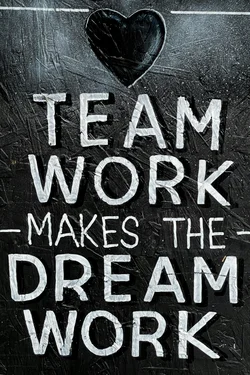
Reward the team, not just the star. When one person wins at the expense of the group, you’ve built a system that destroys itself. When the team wins together, you’ve built something that can last.
This means:
- Celebrating the colleague who mentored the new hire, not just the person who closed the deal
- Tying bonuses to team performance, not just individual metrics
- Making knowledge-sharing a valued activity, not a threat to your position
See how it connects?
According to Harvard Business Review, “collaboration reflects the commitment and capacity of each partner to absorb the skills of the other”.
When workplaces feel like teams rather than arenas, people bring more of themselves to work. They stay longer. They grow faster. They help the business grow, creating more jobs and reducing unemployment.
Now scale that story up. Not one NGO or business, but an entire economy. Not one bouquet, but millions of young Kenyans competing for a shrinking pool of individual opportunities.
What if the problem isn’t the people, it’s the system?
Why This Matters Beyond the Office
Here is the thing about internal team culture: it doesn’t stay inside. Organizations that reward collaboration internally tend to collaborate better externally, with suppliers, partners, communities, and, yes, even competitors.

Final Thought
The bouquet of upside down flowers reflects a system that was getting in its own way. And the same is true of unemployment in Kenya. The talented people are there. The organizations that need them are there. What’s missing is the collaboration that brings them together.
That’s the vision behind pamoja.ke, a community built on the belief that when businesses connect and collaborate, opportunity expands for everyone. Pamoja Tunaweza.
References
- https://hbr.org/1989/01/collaborate-with-your-competitors-and-win
- https://www.bluchic.com/collaboration-over-competition/